Pregnancy Tests





-
 36% off
 -
 13% off
 -
 23% off
 -
 20% off
 -
 new
new -
 10% off
 -
 29% off
 -
 53% off
 -
 33% off
 -
 23% off
 -
 7% offSold out
 -
 new12% offSold out
 -
 new33% offSold out
 -
 23% offSold out
Pregnancy Tests Ireland – The Complete Guide to Pregnancy Testing, Early Detection, Faint Lines & Troubleshooting
Welcome
Whether you're actively trying to conceive, tracking ovulation, waiting for your expected period, or simply looking for reassurance, taking a pregnancy test can be an emotional experience.
Many women find themselves searching for answers to questions such as:
- Is a faint line still a positive result?
- Why did one test show positive and another show negative?
- Should I use first morning urine?
- What does 10 mIU sensitivity mean?
- Can drinking too much water affect my result?
- Is Clearblue better than One Step?
- Why do some women get a positive test and then a negative one?
- Can pregnancy tests be faulty?
These are some of the most common questions we receive from customers.
The good news is that modern pregnancy tests are highly accurate when used correctly. However, understanding how they work, when to test, and how to interpret your results can make a significant difference to your experience.
This guide explains everything you need to know about pregnancy testing, including how pregnancy tests work, how early they can detect pregnancy, what faint lines mean, how to choose the right test, and how to avoid common testing mistakes.
What Is A Pregnancy Test?
A pregnancy test is designed to detect Human Chorionic Gonadotropin (hCG), a hormone that begins to appear in the body during pregnancy.
After a fertilised egg implants into the lining of the uterus, the body starts producing hCG. As levels of this hormone rise, it becomes detectable in both blood and urine.
Home pregnancy tests work by identifying hCG in a urine sample. When enough hCG is present, the test will produce a positive result.
Modern pregnancy tests are highly reliable and can often detect pregnancy before a missed period, depending on the sensitivity of the test and individual hCG levels.
What Is hCG?
hCG stands for Human Chorionic Gonadotropin and is commonly referred to as the "pregnancy hormone."
Once implantation has occurred, hCG production begins and levels typically rise throughout early pregnancy. Pregnancy tests are specifically designed to detect this hormone because it is one of the earliest biological indicators of pregnancy.
One important thing to understand is that hCG levels vary significantly between individuals. There is no single "normal" level that applies to everyone at exactly the same stage.
This variation explains why:
- Some women receive positive results earlier than others.
- Some women see faint lines while others see strong positives.
- Some women test positive several days before their expected period.
- Others may not receive a positive result until after their period is late.
A difference in hCG levels does not automatically indicate anything is wrong. It is simply one of the reasons pregnancy testing can vary from person to person.
How Early Can A Pregnancy Test Detect Pregnancy?
Many modern ultra-sensitive pregnancy tests are capable of detecting pregnancy several days before a missed period.
However, early detection is influenced by several factors, including:
- When implantation occurs.
- How quickly hCG begins to rise.
- The sensitivity of the test being used.
- The concentration of the urine sample.
Because every pregnancy develops slightly differently, there is no exact day when all women will receive a positive result.
Testing earlier can be tempting, particularly for those trying to conceive, but it is important to remember that early testing increases the likelihood of receiving a faint line or a false negative result.
A negative result before a missed period does not necessarily mean you are not pregnant. It may simply mean that hCG has not yet reached a detectable level.
What Is Implantation?
Implantation is the process by which a fertilised egg attaches itself to the lining of the uterus.
This is a crucial stage because hCG production only begins after implantation has occurred. Before implantation, there is no pregnancy hormone available for a test to detect.
The timing of implantation varies between individuals. Some women implant earlier, while others implant later.
This is one of the main reasons why two women who ovulated on the same day can receive very different pregnancy test results.
Understanding implantation helps explain why testing too early often results in disappointment or confusion. Even the most sensitive pregnancy test cannot detect a pregnancy before hCG production begins.
What Happens If I Test Too Early?
Testing too early is one of the most common reasons women receive a negative pregnancy test result despite actually being pregnant.
If implantation has only recently occurred, or has not yet occurred, hCG levels may still be below the sensitivity threshold of the test.
In these situations, the test may correctly display a negative result simply because there is not yet enough hormone present in the urine sample.
This does not necessarily mean pregnancy is absent.
If pregnancy is still suspected after an early negative result, many healthcare professionals recommend waiting approximately 48 hours before testing again. During early pregnancy, hCG levels often rise rapidly, meaning a previously negative result may become positive after only a short period of time.
Patience can be difficult when you're eager for an answer, but waiting a couple of days often provides a much clearer result.
When Is The Best Time To Take A Pregnancy Test?
The best time to take a pregnancy test depends on where you are in your cycle and how early you are testing.
Before Your Expected Period
If you are testing before your expected period, choosing a highly sensitive pregnancy test is particularly important.
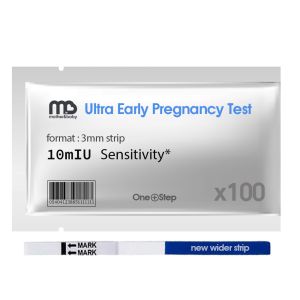
Many women opt for ultra-sensitive 10 mIU pregnancy tests at this stage because they are capable of detecting lower levels of hCG.
However, it is important to expect the possibility of faint lines or negative results when testing very early.
On The Day Of Your Expected Period
By the time your period is due, most pregnancy tests perform very well.
For many women, hCG levels have risen sufficiently for a clear and reliable result to be obtained.
After A Missed Period
Testing after a missed period generally provides the highest level of accuracy.
By this stage, hCG levels are often significantly higher, making positive results easier to detect and reducing the likelihood of uncertainty.
Best Time Of Day
For early pregnancy testing, first morning urine is generally recommended.
This is because urine tends to be most concentrated after several hours of sleep, making hCG easier to detect.
First Morning Urine Explained
You'll often see manufacturers recommend first morning urine, particularly for early pregnancy testing.
This advice exists for a good reason.
During the night, fluid intake usually stops while the body continues to produce urine. As a result, urine becomes more concentrated by morning.
If hCG is present, it is often present in a higher concentration in first morning urine than in samples taken later in the day.
This can make a meaningful difference when testing very early, especially if hormone levels are still relatively low.
Once a pregnancy is more established, the timing of testing becomes less critical. However, for women hoping to detect pregnancy as early as possible, first morning urine remains the preferred option.
Can Drinking Water Affect Pregnancy Test Results?
Yes, it can.
Many people are surprised to learn that drinking large amounts of water before testing may affect the result.
When you consume a significant amount of fluid, your urine becomes more diluted. This can reduce the concentration of hCG present in the sample.
In early pregnancy, when hCG levels may already be relatively low, dilution can sometimes make the difference between a visible positive result and a negative one.
Possible effects include:
- Fainter test lines
- Harder-to-read results
- False negatives during very early pregnancy
For this reason, many experts recommend avoiding excessive fluid intake immediately before taking a pregnancy test, particularly if you are testing before or around the time of your expected period.
Why Was One Test Positive And Another Negative?
This is one of the most common causes of confusion among people taking pregnancy tests.
While it can be alarming to see different results, it is not necessarily a sign that one of the tests is faulty.
Several factors can contribute to differing results, including:
- Different urine concentrations
- Testing at different times of day
- Very early pregnancy
- Low hCG levels
- Excess fluid intake
- Frequent testing
When hCG levels are very close to the detection threshold of a pregnancy test, even small changes in urine concentration can influence the outcome.
For example, a concentrated morning sample may produce a faint positive result, while a diluted afternoon sample may appear negative.
This is particularly common in the earliest stages of pregnancy and does not automatically indicate a problem with the test itself.
Should I Test Multiple Times Per Day?
In most cases, repeatedly testing throughout the same day is not recommended.
Although it may seem reassuring, frequent testing often creates more confusion than clarity.
Urine concentration can vary considerably from one sample to the next depending on hydration, food intake, exercise, and time of day.
As a result, one test may appear darker while another appears lighter, even when both are technically detecting the same pregnancy.
Many apparent "conflicting results" are simply the result of testing different urine samples rather than any issue with the tests themselves.
If you are testing early and hoping to track changes, it is often more useful to wait 48 hours between tests than to test several times in a single day.
Understanding Pregnancy Test Sensitivity
Pregnancy test sensitivity refers to the lowest level of hCG that a test can detect.
You'll often see sensitivity displayed as a number such as 10 mIU, 20 mIU or 25 mIU. In simple terms, the lower the number, the more sensitive the test is to small amounts of hCG.
This is why some tests can detect pregnancy earlier than others.
However, greater sensitivity is not always better for every situation. Highly sensitive tests can provide earlier answers, but they can also produce fainter lines and detect pregnancies at an extremely early stage when hCG levels are still very low.
Understanding sensitivity can help you choose the most suitable test for your circumstances.
What Does 10 mIU Mean?
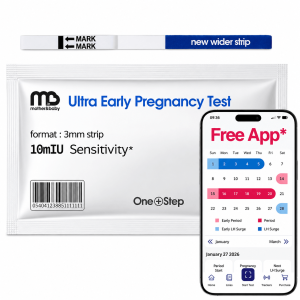
A 10 mIU pregnancy test is considered ultra-sensitive.
These tests are designed to detect very low levels of hCG and are often chosen by women who are trying to conceive and wish to test before their expected period.
Benefits include:
- Earlier pregnancy detection
- Suitable for testing before a missed period
- Popular with TTC (Trying To Conceive) communities
Things to consider:
- Faint lines are more common
- Results may require more interpretation
- Very early pregnancies are more likely to be detected
Many women choose 10 mIU tests when they want the earliest possible indication of pregnancy, but it is important to remember that a negative result at this stage does not necessarily rule pregnancy out.
What Does 20 mIU Mean?
A 20 mIU pregnancy test offers a balance between early detection and result clarity.
These tests remain sensitive enough to detect pregnancy relatively early while often providing slightly clearer results than some ultra-sensitive alternatives.
For many women, 20 mIU tests represent a practical middle ground between maximum sensitivity and ease of interpretation.
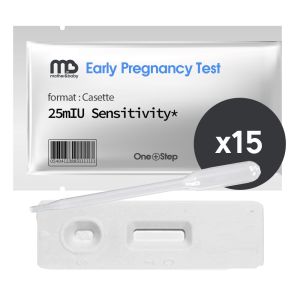
What Does 25 mIU Mean?
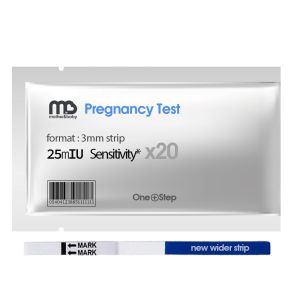
A 25 mIU pregnancy test is considered standard sensitivity.
These tests are commonly used around the time of an expected period or shortly afterwards.
Because they require slightly higher levels of hCG to produce a positive result, they are often less likely to generate uncertainty caused by extremely faint early lines.
For many women testing on or after a missed period, a 25 mIU pregnancy test provides excellent accuracy and reliability.
Which Pregnancy Test Should I Choose?
Choosing the right pregnancy test depends largely on when you intend to test and what level of reassurance you are looking for.
Trying To Conceive (TTC)
Women actively trying to conceive often prefer ultra-sensitive 10 mIU pregnancy tests.
These tests offer the greatest chance of detecting pregnancy before a missed period and are particularly popular among those closely tracking ovulation and implantation timing.
If early detection is your priority, a 10 mIU test is usually the preferred option.
Missed Period Testing
If your period is already due or has been missed, a 20 mIU or 25 mIU pregnancy test is often more than sufficient.
At this stage, hCG levels have usually risen enough for most standard pregnancy tests to detect pregnancy accurately.
Reassurance Testing
Many women choose to repeat a test approximately 48 hours after an initial positive result.
This can provide additional reassurance, particularly when the first result was faint or when testing occurred very early.
Because hCG levels generally increase during early pregnancy, a repeat test often produces a clearer result.
Types Of Pregnancy Tests
Modern pregnancy tests are available in several different formats.
While they all work by detecting hCG, the way the sample is collected and displayed can vary considerably.
The best choice often comes down to personal preference, convenience, and testing goals.
Pregnancy Test Strips
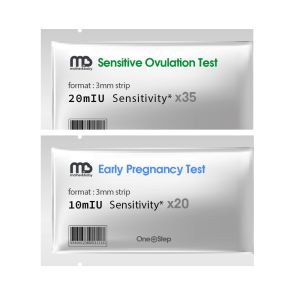
Pregnancy test strips are particularly popular within TTC communities and among women who test frequently.
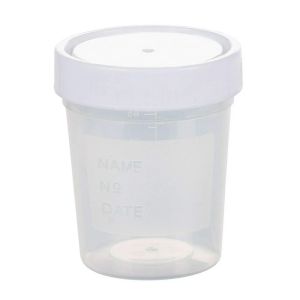
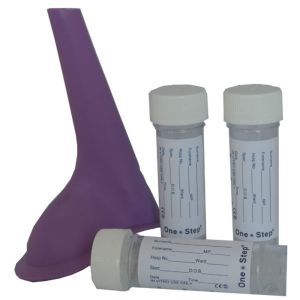
To use a strip test, urine is collected in a clean container and the strip is dipped into the sample according to the manufacturer's instructions.
Benefits include:
- Cost-effective testing
- Highly sensitive options available
- Ideal for frequent testing
- Popular for early detection
Because strips are generally more affordable than other formats, they are often chosen by women who wish to test over several consecutive days.
Midstream Pregnancy Tests
Midstream pregnancy tests are among the most popular formats available.
They are designed to be held directly in the urine stream, eliminating the need for a separate collection container.
Benefits include:
- Convenient to use
- Minimal preparation required
- Easy-to-read format
- Suitable for home testing
Many women prefer midstream tests because they combine convenience with straightforward operation.
Cassette Pregnancy Tests
Cassette pregnancy tests require urine to be collected separately before being added to the test using a dropper.
Although this involves an additional step, some users appreciate the extra control it provides.
Benefits include:
- Controlled sample application
- Clear testing procedure
- Easy-to-view results window
- Reduced risk of over-saturating the test
Cassette tests are commonly used in clinical environments as well as at home.
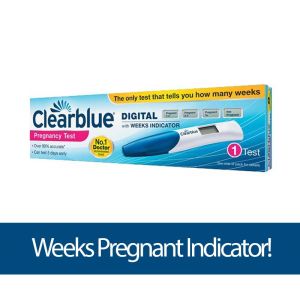
Digital Pregnancy Tests
Digital pregnancy tests replace traditional line interpretation with a clear text result.
Depending on the model, the display may show:
- Pregnant
- Not Pregnant
For many users, this removes uncertainty and eliminates the need to interpret faint or unclear lines.
Benefits include:
- Easy-to-understand results
- No line interpretation required
- Convenient user experience
Considerations include:
- Higher cost per test
- Not always more sensitive than strip tests
- Earlier detection is not guaranteed
Digital tests can be an excellent choice for users who value simplicity and reassurance.
Digital Vs Traditional Pregnancy Tests
Many customers assume that digital pregnancy tests are automatically more accurate than traditional line tests.
In reality, both formats use the same basic scientific principle: detecting hCG in urine.
The primary difference is how the result is displayed.
Digital tests simplify interpretation by displaying a written result, while traditional tests rely on visible test lines.
Accuracy depends on the quality and sensitivity of the individual test rather than whether it is digital or non-digital.
In fact, some ultra-sensitive strip tests may detect pregnancy earlier than certain digital products.
For this reason, women seeking the earliest possible detection often choose highly sensitive strip tests, while those seeking simplicity may prefer a digital format.
Clearblue Vs One Step
Clearblue and One Step are among the most recognised pregnancy testing brands.
Although they differ in appearance, packaging and user experience, both operate using the same underlying scientific principle: detecting hCG in urine.
The differences often relate to:
- Test format
- Ease of use
- Sensitivity
- Number of tests included
- Cost per test
Clearblue products are often chosen for their user-friendly design and digital testing options.
One Step products have become particularly popular within TTC communities due to their strong value, wide range of sensitivity options and suitability for frequent testing.
Neither brand is universally "better" than the other. The most suitable choice depends on your testing goals and personal preferences.
Why Do Some Pregnancy Test Strips Look Wider Than Others?
Customers occasionally notice that some pregnancy test strips appear wider than others and wonder whether this affects performance.
In most cases, strip width is simply a manufacturing and design difference.
Wider strips may:
- Be easier to handle
- Be easier to read
- Use different membrane sizes
- Reflect different manufacturing designs
However, strip width alone does not determine sensitivity, accuracy or reliability.
A narrow ultra-sensitive strip may outperform a wider standard-sensitivity strip, depending on the technology and sensitivity level used.
When comparing tests, sensitivity and quality are generally far more important factors than strip width.
Is A Faint Line Positive?
This is one of the most common questions we receive.
A faint line can be emotionally confusing, particularly when you are testing early and hoping for a positive result.
According to manufacturer instructions, a positive result consists of two coloured lines appearing within the stated reading window.
Importantly:
- One line may be lighter than the other
- The lines do not need to match in colour intensity
- A faint coloured test line may still indicate pregnancy
The darkness of the line alone does not determine whether the result is positive or negative.
What matters is whether a genuine coloured test line appears within the manufacturer's recommended reading period.
Why Did My Friend Get A Darker Line Than Me?
Comparing pregnancy test lines between different people is extremely common, particularly in online fertility groups and TTC communities.
However, line intensity can vary significantly for many reasons, including:
- Individual hCG levels
- Urine concentration
- Time of testing
- Hydration levels
- Natural biological variation
A darker line does not automatically indicate a healthier pregnancy, nor does a lighter line automatically indicate a problem.
Every pregnancy develops differently, and pregnancy tests are designed to detect hCG rather than compare pregnancies.
For this reason, direct comparison between individuals is rarely meaningful.
Pregnancy Line Progression Explained
Many fertility communities enjoy tracking line progression by comparing pregnancy tests taken over several days.
While this can be reassuring for some women, it is important to understand the limitations of home pregnancy tests.
Pregnancy tests are designed to detect hCG.
They are not designed to accurately measure hCG concentration.
As a result, line darkness can vary due to numerous factors, including:
- Urine concentration
- Lighting conditions
- Test brand
- Test batch variation
- Individual hormone levels
A darker line may be encouraging, but line progression should never be viewed as a precise measurement of pregnancy development.
Healthcare professionals rely on other methods when accurate assessment is required.
Evaporation Lines Explained
Evaporation lines are one of the most common causes of confusion when interpreting pregnancy test results.
An evaporation line may appear after the manufacturer's recommended reading window has passed.
As urine dries, changes can occur on the test strip that may resemble a faint line.
For this reason, pregnancy tests should always be interpreted within the reading time stated in the instructions.
Results viewed outside the recommended time window may be invalid and should not be relied upon when determining whether pregnancy is present.
Whenever there is uncertainty, repeating the test according to the manufacturer's instructions is often the most sensible approach.
Chemical Pregnancies Explained
A chemical pregnancy occurs when implantation takes place and hCG production begins, but the pregnancy ends at a very early stage.
Because modern ultra-sensitive pregnancy tests can detect very low levels of hCG, they may sometimes identify pregnancies that would previously have gone unnoticed.
This can result in a sequence such as:
- Positive test result
- Faint positive line
- Positive followed by negative
Experiencing this can be upsetting and confusing.
Importantly, a positive result followed by a negative result does not automatically indicate that a pregnancy test was faulty.
In some cases, it may reflect a very early pregnancy loss rather than a problem with the test itself.
Anyone concerned about pregnancy test results should seek appropriate medical advice from their healthcare professional.
What Causes False Positive Results?
Pregnancy tests are designed to be highly accurate, and false positive results are generally uncommon. However, they can occur in certain circumstances.
A false positive result means the test indicates pregnancy when a pregnancy is not actually present.
Possible causes include:
- Fertility medications containing hCG
- Recent pregnancy loss
- Recent childbirth
- Certain medical conditions
- Reading results outside the recommended time window
It is important to remember that most positive pregnancy test results are genuine. However, if a result seems unexpected or does not match your circumstances, repeating the test or seeking medical advice may be appropriate.
Fertility Medication & Pregnancy Tests
Certain fertility treatments contain hCG and can directly affect pregnancy test results.
Examples may include trigger injections used during fertility treatment cycles.
Because pregnancy tests detect hCG, residual hormone from these medications may sometimes produce a positive result even when implantation has not yet occurred.
For this reason, women undergoing fertility treatment should always follow the guidance provided by their fertility clinic regarding when to test.
If you are receiving fertility treatment and are unsure how medication may affect your results, consult your healthcare provider before drawing conclusions from a home pregnancy test.
What Causes False Negative Results?
False negatives are generally more common than false positives.
A false negative occurs when a pregnancy is present, but the test fails to detect sufficient hCG to produce a positive result.
Possible causes include:
- Testing too early
- Dilute urine
- Low hCG levels
- Incorrect usage
In most cases, false negatives occur because testing takes place before hCG levels have risen high enough for detection.
This is why a negative result does not always rule out pregnancy, particularly if testing occurred before a missed period.
If pregnancy is still suspected, retesting after approximately 48 hours is often recommended.
How To Use Pregnancy Test Strips Correctly
Using a pregnancy test correctly is essential for obtaining reliable results.
Although the process is straightforward, small mistakes can sometimes affect performance or create confusion.
For best results:
- Collect urine in a clean, dry container.
- Open the test pouch immediately before use.
- Dip the strip only to the MAX line.
- Follow the dipping time stated in the instructions.
- Remove the strip from the sample.
- Place it flat on a clean, dry surface.
- Read the result within the recommended reading window.
Always follow the instructions supplied with the specific test you are using, as procedures can vary slightly between manufacturers.
Common Testing Mistakes
Even high-quality pregnancy tests can produce confusing results if they are not used correctly.
Some of the most common mistakes include:
Over-Dipping
Leaving the strip in the urine sample for too long or dipping beyond the MAX line can affect test development.
Under-Dipping
Insufficient sample exposure may prevent the test from absorbing enough urine for proper development.
Not Laying The Test Flat
Many tests are designed to develop on a flat surface. Tilting or moving the test during development may interfere with the process.
Reading Too Late
Results should always be interpreted within the manufacturer's stated reading window.
Lines that appear after this period may not represent a valid result.
Following the instructions carefully can eliminate many of the issues that lead to unnecessary concern.
Can Storage Affect Pregnancy Tests?
Absolutely.
Pregnancy tests contain sensitive materials designed to react with hCG. Improper storage can potentially affect performance over time.
Tests should generally be stored:
- Between 2°C and 30°C
- In a cool, dry place
- Inside their sealed pouch until ready for use
Avoid exposing tests to:
- Freezing temperatures
- Direct sunlight
- Excessive heat
- Damp environments
Proper storage helps ensure the test performs as intended when you need it.
Can Bathroom Storage Cause Problems?
Potentially, yes.
Bathrooms often experience conditions that are less than ideal for storing diagnostic tests.
These may include:
- High humidity
- Steam from showers and baths
- Condensation
- Frequent temperature fluctuations
While occasional exposure may not necessarily damage a test, long-term storage in a humid environment is generally not recommended.
For best results, pregnancy tests should be kept in a cool, dry location away from moisture.
Do Pregnancy Tests Expire?
Yes.
Like most medical and diagnostic products, pregnancy tests have an expiry date and should not be used beyond that date.
The materials used to detect hCG can deteriorate over time, potentially affecting the accuracy and reliability of the result.
Always check the expiry date before testing and ensure the packaging remains sealed and undamaged.
Using an expired pregnancy test increases the risk of unreliable results and should be avoided.
Pregnancy Test Troubleshooting Guide
Even when used correctly, questions can sometimes arise about pregnancy test results.
The following guide covers some of the most common situations.
Faint Line
Possible causes include:
- Early pregnancy
- Low hCG levels
- Dilute urine
A faint coloured line appearing within the manufacturer's reading window may still indicate pregnancy.
Positive Then Negative
Possible causes include:
- Chemical pregnancy
- Different urine concentrations
- Testing close to the sensitivity threshold
This does not automatically mean the test was faulty.
No Control Line
A missing control line indicates an invalid test.
The result should not be interpreted and a new test should be used.
Smudged Dye
Possible causes include:
- Oversaturation
- Storage issues
- Incorrect testing technique
A smudged or unclear result may require repeat testing.
Negative But Period Late
Possible causes include:
- Testing too early
- Late ovulation
- Dilute urine
If your period remains absent and pregnancy is still suspected, repeating the test after a short interval may be appropriate.
If You Believe A Test Is Faulty
We take all reports regarding product performance seriously.
In the rare event that a customer believes a pregnancy test may be faulty, it is important that sufficient information is available to allow a proper investigation.
To assist both ourselves and the manufacturer, please retain:
- The test itself
- The foil wrapper
- The lot number
- The expiry date
- Photos of the result
- Date tested
- Time tested
- Storage details
This information allows proper batch-level investigation and helps determine whether any manufacturing issue may have occurred.
Without these details, meaningful investigation is often impossible.
Before Contacting Support
To help us assist you as quickly as possible, please have the following information available:
- Order number
- Product name
- Photo of the result
- Photo of the foil wrapper
- Lot number
- Expiry date
- Date tested
- Time tested
- Storage conditions
Providing these details at the outset allows our support team to investigate your query more efficiently and reduces delays.
When Should I Contact My Doctor?
Home pregnancy tests are an excellent screening tool, but they do not replace professional medical advice.
You should consider contacting your doctor or healthcare professional if:
- You receive repeated positive results
- You receive conflicting results
- Your period remains absent despite negative tests
- You have concerns regarding pregnancy or fertility
- You experience symptoms that worry you
A home pregnancy test provides an indication of pregnancy. Diagnosis, ongoing care and any concerns regarding fertility or pregnancy should always be discussed with a qualified healthcare professional.
Shop Pregnancy Tests Online In Ireland
At MotherandBaby.ie, we stock a wide range of pregnancy tests to suit every stage of your journey, whether you're testing early, confirming a missed period, or simply looking for reassurance.
Our range includes:
- Ultra-sensitive 10 mIU pregnancy tests
- Early detection pregnancy tests
- Midstream pregnancy tests
- Digital pregnancy tests
- Pregnancy test value packs
- Fertility tracking products
All orders are dispatched from Ireland, allowing for fast nationwide delivery and local customer support when you need it.
Whether you're hoping for a positive result, seeking reassurance, or simply looking for reliable testing products from trusted brands, we're here to help make the process as straightforward as possible.