Ovulation Tests





-
 31% off
 -
 3% off
 -
 new
new -
 new17% off
 -
 0 Left
 -
 7% offSold out
 -
 new44% offSold out
 -
 15% offSold out
 -
 23% offSold out
 -
 23% offSold out
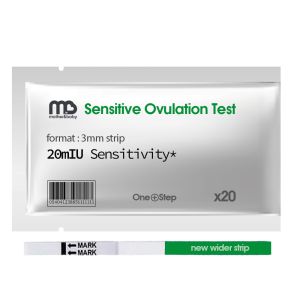
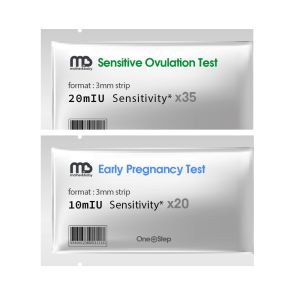
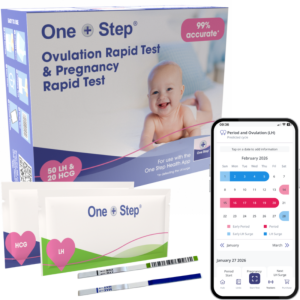
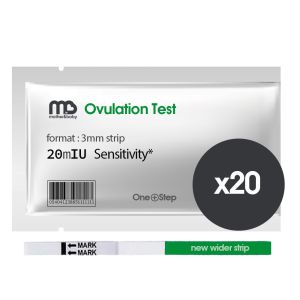
Ovulation Tests Ireland – Complete Buying Guide & FAQ
Ovulation Tests Explained
If you're trying to conceive, knowing when you're most fertile can make a significant difference. Ovulation tests are one of the most popular and effective tools available for identifying your fertile window and helping you understand your cycle more clearly.
Ovulation tests work by detecting Luteinising Hormone (LH) in urine. LH is a naturally occurring hormone that rises sharply shortly before ovulation. This increase, known as the LH surge, usually occurs 24 to 36 hours before an egg is released.
By identifying this surge, ovulation tests can help you determine your most fertile days and improve the timing of intercourse when trying to conceive.
Whether you're using ovulation tests for the first time or have been tracking your cycle for several months, understanding how these tests work can help you get the most accurate and useful results.
This guide explains the different types of ovulation tests available, how to choose the right product, how to interpret results correctly and how to avoid some of the most common testing mistakes.
Which Ovulation Test Should I Choose?
Choosing the right ovulation test often depends on your personal preferences, budget and how closely you want to monitor your cycle.
Some women prefer simple and affordable strip tests that allow frequent testing throughout the month. Others prefer digital products that provide easy-to-read results with minimal interpretation.
The good news is that all ovulation tests are designed around the same basic scientific principle: detecting LH in urine.
The main differences between products usually relate to convenience, format, tracking features and user experience rather than fundamental accuracy.
Understanding the strengths of each type can help you choose the option that best suits your fertility journey.
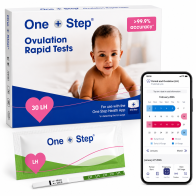
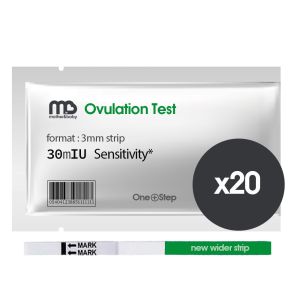
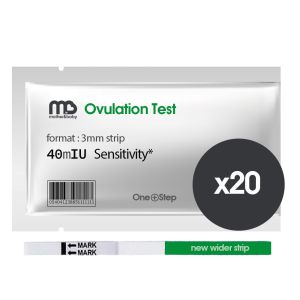
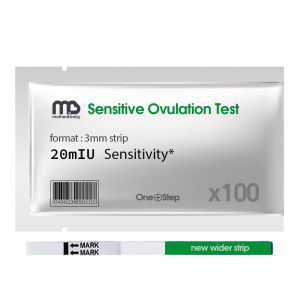
One Step Ovulation Tests
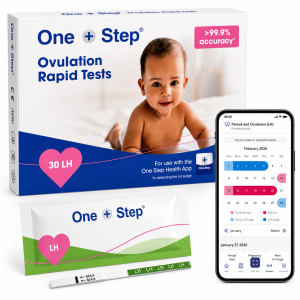
One Step ovulation tests are among the most popular choices for women who are actively trying to conceive.
They have become particularly popular within TTC (Trying To Conceive) communities because they offer a practical balance of sensitivity, affordability and flexibility.
Benefits include:
- Excellent value for money
- Ideal for regular testing
- Easy to track progression
- Compatible with ovulation tracking apps
- Available in convenient value packs
Many women prefer strip-based testing because it allows them to monitor changes in LH levels throughout the cycle rather than simply looking for a single positive result.
By testing regularly, it becomes easier to spot patterns and identify the gradual build-up towards ovulation.
This approach can be especially useful for women who are still learning their cycle or who experience slight variations in ovulation timing from month to month.
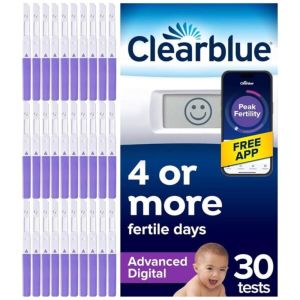
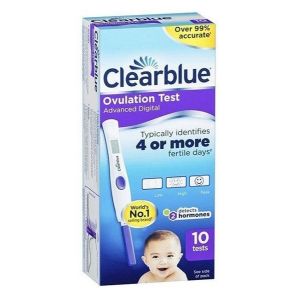
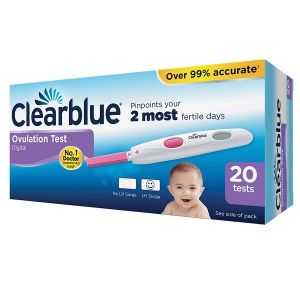
Clearblue Ovulation Tests
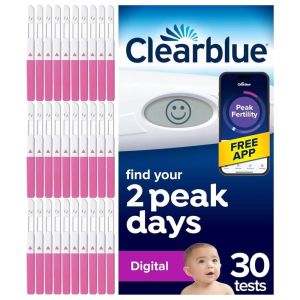
Clearblue ovulation tests are designed with convenience and ease of use in mind.
They are particularly popular among women who are new to ovulation testing and want straightforward results without needing to compare line intensity or monitor progression manually.
Benefits include:
- Easy-to-read results
- Digital options available
- Suitable for first-time users
Many women appreciate the simplicity of Clearblue products because they remove much of the guesswork involved in interpreting test lines.
Instead of deciding whether a line is dark enough to be considered positive, users are often presented with a simple result that is easy to understand.
For women who value convenience and reassurance, this can be a significant advantage.
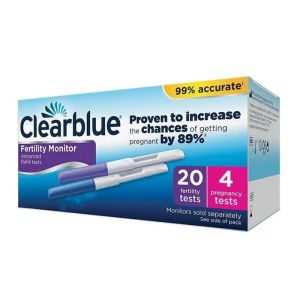
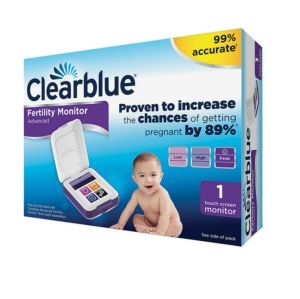
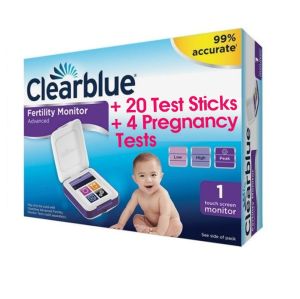
Clearblue Advanced Fertility Monitor
The Clearblue Advanced Fertility Monitor is designed for women who want a more detailed understanding of their fertility patterns.
Unlike standard ovulation tests that focus primarily on LH, the monitor tracks multiple fertility hormones throughout the cycle.
Benefits include:
- Advanced fertility tracking
- Identification of high fertility and peak fertility days
- Suitable for women who want detailed cycle monitoring
Many women choose advanced fertility monitoring when they have been trying to conceive for some time or simply want a more comprehensive picture of their fertile window.
By analysing multiple hormonal changes, the monitor can provide additional insights beyond a standard LH test alone.
Digital Ovulation Tests
Digital ovulation tests provide results in a format that many users find easier to interpret than traditional line tests.
Rather than comparing line strength, the device displays a result directly.
Benefits include:
- Easy to read
- No uncertainty around line strength
- Beginner friendly
Many women find digital testing less stressful because there is no need to wonder whether a line is dark enough or whether a result should be considered positive.
However, there are some considerations to keep in mind.
Considerations:
- Higher cost per test
- Less visibility of progression
Because digital tests focus on delivering a clear result, they generally provide less opportunity to observe gradual changes in LH levels throughout the cycle.
For some women this is ideal, while others prefer the additional information provided by strip testing.
Ovulation Test Strips
Despite the growth in digital fertility products, ovulation strips remain the preferred choice for many women trying to conceive.
They are simple, effective and allow frequent testing without significant cost.
Benefits include:
- Cost effective
- Ideal for frequent testing
- Allows monitoring of LH progression
- Excellent value
One reason ovulation strips remain so popular is that they allow women to see hormonal changes developing over time.
Instead of receiving a simple positive or negative result, users can often observe lines gradually becoming darker as the LH surge approaches.
This can provide useful insight into individual cycle patterns and help build confidence when identifying fertile days.
For this reason, many fertility forums and TTC communities continue to favour strip testing as a practical and affordable option.
Clearblue vs One Step Ovulation Tests
Both Clearblue and One Step products use proven LH detection technology and can be effective tools when trying to conceive.
The best choice depends largely on your priorities.
If affordability, frequent testing and progression tracking are important, many women favour One Step ovulation tests.
If convenience and simple interpretation are the priority, many women prefer Clearblue products.
Value For Money
One Step products are often considered excellent value because they are commonly available in larger packs and are well suited to daily testing.
Clearblue products generally cost more per test but may offer additional convenience features.
Cost Per Test
One Step tests typically have a lower cost per test.
Clearblue tests generally carry a higher price point due to their design and digital technology.
Progression Tracking
One Step strip tests are particularly useful for monitoring changes in LH levels over several days.
Clearblue products generally focus more on identifying fertile days rather than showing progression.
Ease Of Use
Both products are straightforward to use, but many first-time users find Clearblue particularly easy because interpretation is simplified.
TTC Community Popularity
One Step products are extremely popular within TTC communities because they support frequent testing and progression tracking.
Clearblue also enjoys strong popularity, particularly among women who prefer digital formats and simplified results.
Ultimately, neither option is universally better. The right choice depends on your budget, testing habits and personal preferences.
Are Cheap Ovulation Tests Accurate?
This is one of the most common questions we receive.
The simple answer is yes.
Many women assume that more expensive ovulation tests must be more accurate, but that is not necessarily the case.
Regardless of price, ovulation tests are designed to detect LH in urine. The underlying science remains the same.
Differences between products are often related to:
- Format
- Convenience
- Packaging
- Sensitivity
- User experience
Rather than accuracy alone.
In many cases, a well-manufactured strip test can be just as effective at detecting an LH surge as a more expensive branded product.
Paying more often provides additional convenience or features rather than fundamentally different hormone detection technology.
Why Do Ovulation Tests Usually Show Two Lines?
This is one of the biggest differences between ovulation tests and pregnancy tests, and it often causes confusion for first-time users.
With pregnancy tests, seeing a second line is usually significant.
With ovulation tests, seeing two lines is completely normal throughout much of the cycle.
This is because LH is present in the body at low levels for most of the month.
As a result, many women will see a second test line even when ovulation is not approaching.
The goal is not simply to look for two lines.
Instead, the goal is to identify when the test line becomes as dark as, or darker than, the control line.
That change indicates that an LH surge may be occurring and that ovulation could be approaching.
Understanding this difference helps avoid one of the most common mistakes made by new users.
What Does A Faint Ovulation Line Mean?
A faint ovulation test line is usually considered a negative result.
Because LH is normally present at low levels throughout the cycle, many women see faint lines for days or even weeks before ovulation.
This is entirely normal and should not be a cause for concern.
A faint line simply indicates that some LH is present in the urine sample.
It does not necessarily mean ovulation is imminent.
Many women become worried when they repeatedly see faint lines without achieving a positive result. In reality, this is often exactly what a normal cycle looks like.
The important thing is to watch for a noticeable increase in line intensity as the LH surge approaches.
What Does A Positive Ovulation Test Look Like?
A positive ovulation test is identified differently from a positive pregnancy test.
For most ovulation tests:
- The test line should be as dark as the control line
- Or darker than the control line
When this occurs, it suggests that an LH surge is taking place.
This surge often indicates that ovulation may occur within the next 24 to 36 hours, making this one of the most fertile times of the cycle.
Unlike pregnancy tests, a faint second line is not usually considered positive.
This distinction is important because many women mistakenly interpret any second line as a positive result.
When using ovulation tests, line intensity matters. The key is comparing the test line to the control line and looking for the point at which they become equal in darkness or the test line becomes darker.
Once you understand this principle, ovulation test interpretation becomes much more straightforward.
Why Am I Not Getting A Peak?
This is one of the most common questions we receive from customers using ovulation tests.
It can be frustrating to test day after day without seeing a clear positive result, particularly when you're actively trying to conceive.
However, not detecting a peak does not automatically mean there is a problem with your cycle or that the tests are faulty.
There are several possible explanations, including:
- Missing the LH surge
- Testing too early in the cycle
- Testing too late in the cycle
- Having a short LH surge
- Irregular cycle patterns
- Excessive fluid intake
- Testing at inconsistent times
Many women assume ovulation always occurs on Day 14, but in reality cycle timing varies significantly from person to person and even from month to month.
For some women, ovulation occurs earlier than expected. For others, it may happen much later.
The key is consistency. Regular testing over several cycles often helps build a clearer picture of your individual fertility pattern.
Can I Miss My LH Surge?
Yes.
In fact, this is far more common than many people realise.
While some women experience an LH surge that remains detectable for a day or two, others may experience a much shorter surge that lasts only a matter of hours.
If you're testing only once per day, it is possible to miss this peak entirely.
For example, if your surge begins in the early morning and has already declined by the following day, a single daily test may never capture the strongest result.
Women approaching their expected ovulation date often benefit from testing twice daily, particularly if they have previously struggled to identify a clear peak.
Testing once in the late morning and again later in the afternoon can increase the chances of detecting a shorter LH surge.
Missing a surge does not necessarily mean ovulation did not occur. It may simply mean the peak was not captured at the right moment.
What Is The Best Time To Take An Ovulation Test?
Unlike pregnancy tests, ovulation tests are generally not designed to be used with first morning urine.
Most manufacturers recommend testing later in the day, when LH is often more readily detectable in urine.
A commonly recommended testing window is:
- 10am to 8pm
Many women choose a convenient time within this window and stick to it consistently throughout the cycle.
Consistency is often more important than finding the "perfect" hour.
Testing at approximately the same time each day makes it easier to compare results and identify changes in LH levels as ovulation approaches.
If you're approaching your expected fertile window and want to maximise your chances of detecting a surge, some women choose to test twice daily.
Should I Use First Morning Urine?
Generally, no.
This is one of the biggest differences between ovulation tests and pregnancy tests.
Pregnancy tests often benefit from first morning urine because hCG becomes more concentrated overnight.
Ovulation tests work differently.
LH production follows its own daily pattern, and many manufacturers recommend testing later in the day when LH is more likely to be detectable in urine.
For this reason, first morning urine is usually not considered ideal for ovulation testing.
Always follow the instructions supplied with your specific product, as recommendations can vary slightly between manufacturers.
Can Drinking Too Much Water Affect Ovulation Tests?
Yes.
Hydration can have a significant impact on ovulation test results.
Drinking excessive amounts of fluid before testing may dilute your urine and reduce the concentration of LH present in the sample.
This can lead to:
- Lighter test lines
- Difficulty identifying progression
- Missing an LH surge
- False assumptions about cycle timing
Women sometimes increase their water intake because they know concentrated urine is important for testing. Ironically, overdoing it can make results harder to interpret.
For best results:
- Avoid excessive fluid intake before testing
- Consider limiting fluids for several hours beforehand
- Test under similar conditions each day where possible
A more concentrated sample often provides clearer and more reliable results.
Should I Hold My Urine Before Testing?
Many manufacturers recommend avoiding urination for approximately two to four hours before taking an ovulation test where practical.
The reason is simple.
Allowing urine to remain in the bladder for a period of time can increase hormone concentration and make LH easier to detect.
This does not mean you need to be uncomfortable or force yourself to wait unnecessarily.
Instead, think of it as creating a more consistent testing environment.
Combining a short hold period with moderate fluid intake often produces the clearest and most reliable results.
How To Use Ovulation Test Strips Correctly
Although ovulation tests are simple to use, following the instructions carefully can help avoid confusion and improve accuracy.
For best results:
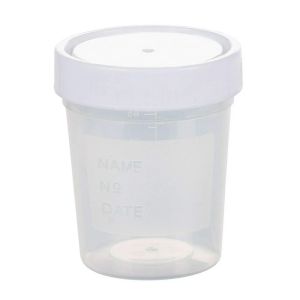
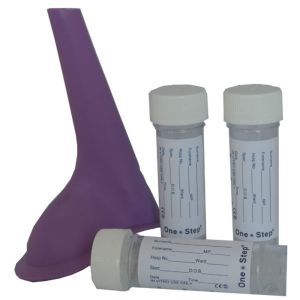
- Collect urine in a clean, dry container.
- Open the foil pouch immediately before use.
- Dip the strip only to the MAX line.
- Follow the dipping time stated in the instructions.
- Remove the strip from the urine sample.
- Lay it flat on a clean, dry surface.
- Read the result within the recommended reading window.
Small mistakes in technique can sometimes affect development and make results harder to interpret.
Following the instructions supplied with the product remains the best way to ensure reliable performance.
Common Ovulation Test Mistakes
Most problems with ovulation testing are not caused by faulty tests. They are usually the result of timing, interpretation or testing technique.
Understanding the most common mistakes can help you avoid unnecessary confusion.
Over-Dipping
Leaving the strip in urine for longer than recommended or dipping beyond the MAX line may interfere with proper development.
Always follow the dipping time specified by the manufacturer.
Under-Dipping
Removing the strip too quickly or failing to expose it to enough urine may prevent proper sample absorption.
This can affect the appearance of the result.
Reading Too Late
Ovulation tests should only be interpreted within the manufacturer's stated reading window.
Results observed after this period may not be valid.
As the test dries, changes can occur that may alter the appearance of the lines.
Testing At Different Times Every Day
Consistency is extremely important when tracking LH.
Testing at dramatically different times each day can make progression more difficult to follow and may increase the risk of missing a surge.
Comparing Ovulation Tests To Pregnancy Tests
This is one of the most common mistakes made by first-time users.
Pregnancy tests and ovulation tests use completely different interpretation rules.
With pregnancy tests, a faint second line may still indicate a positive result.
With ovulation tests, faint lines are often completely normal and are usually considered negative.
Understanding this distinction can prevent a great deal of confusion and unnecessary worry.
Ovulation Tracking Apps
Many women now use fertility tracking apps alongside ovulation tests to gain a clearer picture of their cycle.
These apps can help organise testing data, identify patterns and provide predictions about fertile windows.
Popular examples include:
- One Step App
- Premom
- Flo
- Clue
- Ovia
Many apps allow users to:
- Track menstrual cycles
- Store ovulation test results
- Monitor progression
- Predict fertile windows
- Compare previous cycles
Apps can be extremely useful organisational tools, particularly for women testing regularly over multiple months.
However, it is important to remember that apps are prediction tools rather than diagnostic tools.
They should support your fertility tracking rather than replace proper interpretation of test results.
One Step Ovulation App
The One Step App is specifically designed to work alongside ovulation testing and fertility tracking.
Features include:
- Photographing ovulation strips
- Tracking progression
- Comparing cycles
- Storing results
- Monitoring fertility trends
Many women find the app particularly useful because it creates a visual record of test progression throughout the cycle.
This can make it easier to identify patterns and compare results from month to month.
For women who test regularly, having all results stored in one place can be a valuable tracking tool.
Can Apps Read Ovulation Tests Correctly?
Fertility apps can be extremely helpful, but they are not perfect.
Most apps rely on image analysis, which means results can sometimes be influenced by factors unrelated to hormone levels.
These may include:
- Lighting conditions
- Camera quality
- Strip positioning
- Image quality
- Shadows or reflections
For this reason, app-generated results should always be treated as guidance rather than absolute conclusions.
The most reliable approach is to use the app as a helpful support tool while continuing to review and interpret your results yourself.
Think of the app as an assistant rather than the final decision-maker.
This balanced approach allows you to benefit from technology while maintaining confidence in your own understanding of the test results.
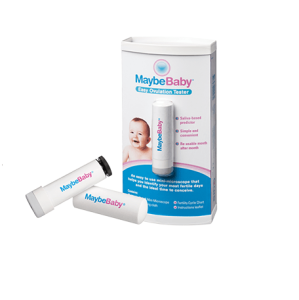
Saliva Ovulation Tests
Most ovulation tests work by detecting LH in urine, but saliva ovulation tests take a completely different approach.
Rather than measuring hormones directly in urine, saliva tests look for changes in saliva patterns that occur as oestrogen levels rise during the fertile phase of the menstrual cycle.
When viewed under magnification, saliva may develop a distinctive crystal-like pattern known as "ferning." This pattern is associated with the hormonal changes that occur before ovulation.
Advantages of saliva ovulation tests include:
- Reusable device
- No urine collection required
- Can be used repeatedly throughout the cycle
- No ongoing purchase of test strips
However, there are also some limitations.
Disadvantages include:
- Results can be more subjective
- Requires practice and experience
- Interpretation may vary between users
- Less commonly used than urine-based LH testing
For these reasons, most women continue to rely primarily on urine-based ovulation tests, particularly when trying to identify their LH surge with confidence.
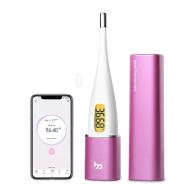
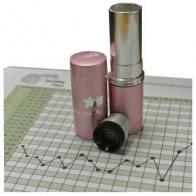
Fertility Thermometers & Basal Body Temperature (BBT)
Many women choose to combine ovulation testing with Basal Body Temperature (BBT) tracking.
BBT tracking involves measuring your temperature immediately upon waking each morning, before getting out of bed or carrying out any activity.
Following ovulation, hormonal changes typically cause a small but measurable increase in body temperature.
By recording temperatures daily, many women can identify patterns that suggest ovulation has occurred.
Benefits of BBT tracking include:
- Improved understanding of cycle patterns
- Additional fertility insights
- Useful alongside ovulation testing
- Helps identify trends over multiple cycles
It is important to understand that BBT and ovulation tests serve different purposes.
Ovulation tests help predict ovulation before it occurs.
BBT tracking helps confirm that ovulation has likely already occurred.
For this reason, many fertility specialists and TTC communities recommend using both methods together for a more complete picture of the menstrual cycle.
Ovulation Calendars & Fertility Calculators
Ovulation calendars and fertility calculators are widely used by women who are trying to conceive.
These tools estimate fertile days based on information such as cycle length and menstrual history.
They can be useful for planning and understanding general cycle patterns.
However, there is an important limitation.
Ovulation calculators estimate fertility.
They do not actually measure hormones.
This means that predictions are based on assumptions about when ovulation is likely to occur rather than direct biological evidence.
Factors such as stress, illness, travel, lifestyle changes and natural cycle variation can all influence ovulation timing.
As a result, actual ovulation may occur earlier or later than predicted.
Ovulation tests provide real-time biological information by detecting hormonal changes in the body.
For many women, the most effective approach is to combine calendar tracking with ovulation testing rather than relying on predictions alone.
Can Pregnancy Cause A Positive Ovulation Test?
Occasionally, yes.
This is because Human Chorionic Gonadotropin (hCG), the hormone detected by pregnancy tests, is structurally similar to Luteinising Hormone (LH), which is detected by ovulation tests.
As hCG levels rise during pregnancy, some ovulation tests may react to the hormone and produce a positive result.
However, ovulation tests are not designed to diagnose pregnancy.
A positive ovulation test should never be used as confirmation of pregnancy.
If pregnancy is suspected, a dedicated pregnancy test should always be used instead.
Pregnancy tests are specifically designed to detect hCG and provide a much more reliable answer.
Can Stress Affect Ovulation?
Potentially.
Stress can influence many aspects of the body's hormonal system and may affect cycle timing in some women.
For certain individuals, periods of significant physical or emotional stress may contribute to:
- Changes in ovulation timing
- Changes in cycle length
- Delayed ovulation
- Irregular fertility tracking results
Not every woman will experience noticeable changes, but stress is one of several factors that can influence normal hormonal patterns.
This is one reason why ovulation may occasionally occur earlier or later than expected.
Can Illness Affect Ovulation?
Potentially.
Temporary illness can sometimes affect the body's normal hormonal balance and influence cycle timing.
Factors such as:
- Fever
- Infection
- Significant physical stress
- Recovery from illness
may contribute to temporary changes in ovulation timing.
In many cases, normal cycle patterns return once health has recovered.
If cycle irregularities persist, seeking medical advice may be appropriate.
Can Weight Changes Affect Ovulation?
Yes.
Significant weight gain or weight loss can sometimes affect hormone production and ovulation patterns.
The reproductive system is closely linked to overall health and energy balance.
Substantial changes in body weight may contribute to:
- Irregular cycles
- Delayed ovulation
- Missed ovulation
- Changes in fertility tracking patterns
This does not mean that minor fluctuations in weight will necessarily affect fertility, but larger changes can sometimes influence normal cycle function.
Can Breastfeeding Affect Ovulation?
Yes.
Breastfeeding commonly affects both ovulation and menstrual cycle regularity.
Hormonal changes associated with breastfeeding can suppress or delay ovulation, particularly during the early months after childbirth.
Some women may experience:
- Delayed return of ovulation
- Irregular cycles
- Unpredictable fertile windows
Because of this, fertility tracking while breastfeeding can sometimes be more challenging than usual.
Women who are breastfeeding and trying to conceive may benefit from combining multiple fertility tracking methods for a clearer picture of their cycle.
Can Storage Affect Ovulation Tests?
Yes.
Like all diagnostic products, ovulation tests should be stored correctly to help ensure reliable performance.
Most manufacturers recommend storing tests:
- In a cool, dry location
- In their sealed foil pouches
- Away from direct sunlight
Avoid storing tests in conditions such as:
- Humid bathrooms
- Excessive heat
- Freezing temperatures
- Areas exposed to moisture
Proper storage helps protect the sensitive materials used within the test and ensures the product performs as intended.
Do Ovulation Tests Expire?
Yes.
Ovulation tests have an expiry date and should not be used beyond that date.
The chemicals used to detect LH can deteriorate over time, which may affect performance and reliability.
Before testing, always check:
- The expiry date
- That the foil pouch remains sealed
- That the packaging is undamaged
Using an expired ovulation test may increase the risk of unreliable results and should be avoided.
What If I Think My Ovulation Test Is Faulty?
We take all reports regarding product performance seriously.
Although genuine manufacturing issues are uncommon, any report should be properly investigated to determine whether a product issue may have occurred.
To assist both ourselves and the manufacturer, please retain:
- The test itself
- The foil wrapper
- The lot number
- The expiry date
Please also provide:
- Photos of the results
- Storage conditions
- Time of testing
- Cycle day
Manufacturers require this information to perform meaningful batch investigations and quality assessments.
Without these details, it is often impossible to determine whether a manufacturing issue may have contributed to the reported result.
Why We Ask For Lot Numbers & Expiry Dates
Customers are sometimes surprised when we request lot numbers and expiry dates during an investigation.
The reason is simple: these details provide full traceability.
They allow manufacturers to:
- Verify production batches
- Review quality control records
- Check manufacturing data
- Investigate potential issues
- Compare reports from other customers
Without batch information, manufacturers are often unable to carry out a formal assessment.
Providing these details helps ensure any concerns are investigated properly and thoroughly.
Shop Ovulation Tests Online In Ireland
At MotherandBaby.ie, we stock a wide range of fertility products designed to support every stage of your fertility journey.
Our range includes:
- One Step Ovulation Tests
- Clearblue Ovulation Tests
- Digital Ovulation Tests
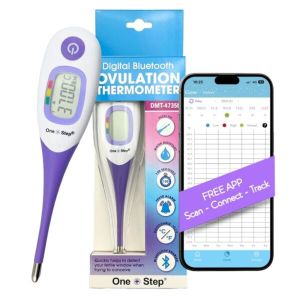
- Fertility Thermometers
- Ovulation & Pregnancy Test Bundles
- Fertility Tracking Products
Whether you're new to ovulation testing or have been tracking your cycle for months, choosing the right products can help you better understand your fertile window and improve confidence in your fertility tracking.
All orders are dispatched directly from Ireland for fast nationwide delivery and local customer support.
Our goal is to provide reliable fertility products, practical guidance and trusted support to help make your journey to conception as straightforward and informed as possible.